Best Satellite Internet Providers of 2026
Starlink is our favorite all-around satellite ISP for its high speeds, unlimited data, no-contract plan, and expansive rural coverage.



- Starlink delivers the fastest baseline speeds, making it a top pick for remote workers and gamers who require responsive, low-latency performance.
- Viasat offers highly reliable unlimited data plans without strict hard data overage caps, ensuring remote families who stream video stay seamlessly connected.
- Hughesnet introduced 100 Mbps plans that consistently serve as the most budget-friendly entry point for reliable basic household web browsing.
For many households in rural areas, satellite internet is the only viable path to a reliable connection, especially for daily routines like streaming high-definition video, attending remote Zoom calls, or managing connected home devices. However, picking the right satellite internet provider can be the difference between getting the consistent browsing speeds your family needs and being stuck with a bill you cannot afford. To simplify your decision, we researched every satellite internet provider in the United States to help you choose the right one for you based on availability, speed, value, reliability, and reputation.
If you’re looking for an accessible satellite internet provider with options for unlimited data, no-contract plans, and speeds up to 400 Mbps, you cannot beat Starlink. With cutting-edge technology and Low-Earth Orbit satellites, the provider offers a strong connection for customers without access to wired providers. Check out the latest Starlink internet deals to find the plan that matches your home’s needs.
Watch: Our Favorite Satellite Internet Provider
Want a quick explanation of why we chose Starlink as our favorite satellite internet provider? Check out our quick video to learn what this ISP brings to the table.
Starlink (BroadbandNow Top Pick)
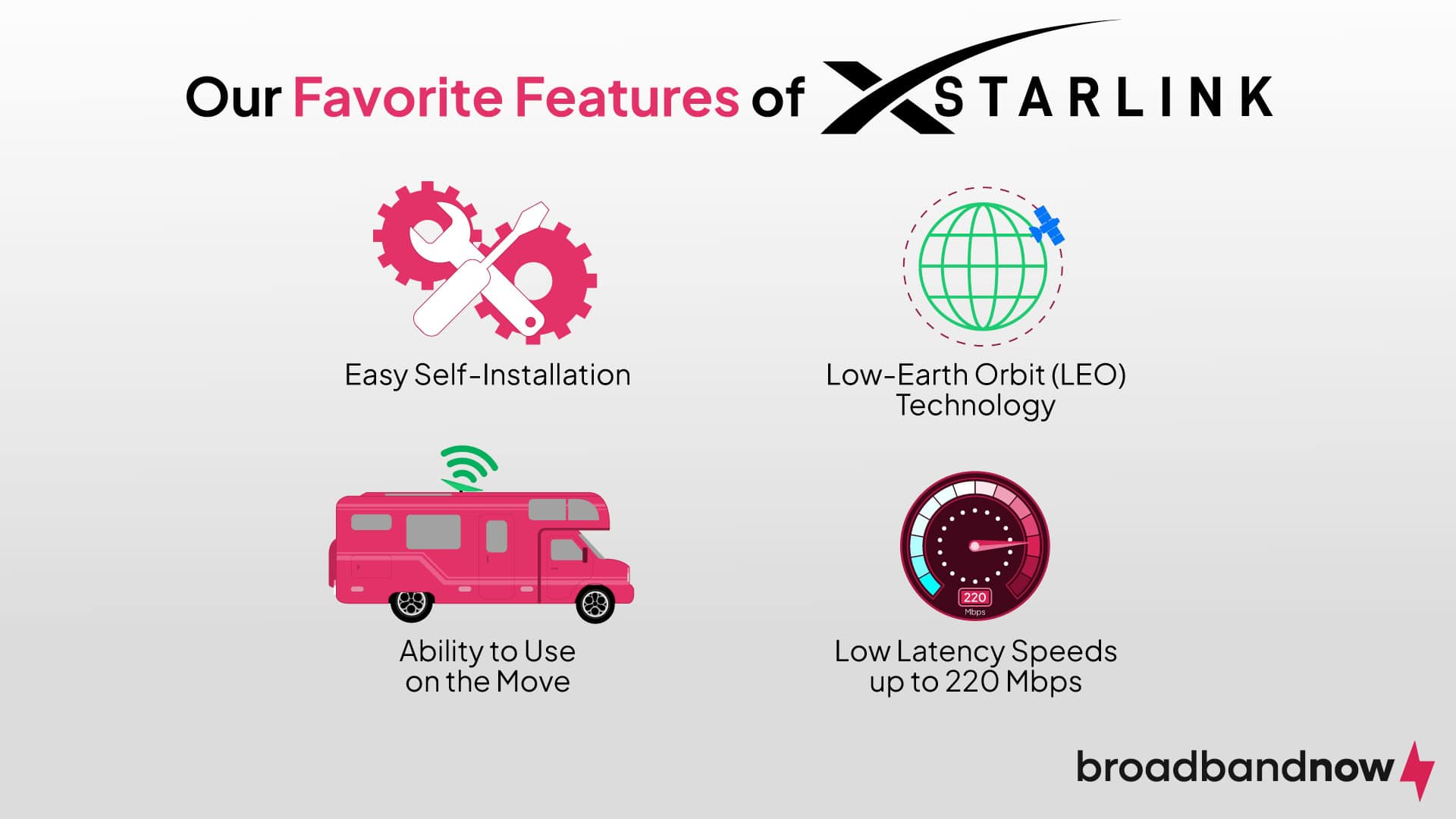
Unlike its traditional satellite internet counterparts at Viasat and Hughesnet, Starlink’s Low-Earth Orbit (LEO) satellites generate a high-performance service that leaves older satellite ISPs stargazing. The provider is our top pick because it offers the type of connection that most modern internet users need without having to sacrifice too much. With speeds up to 400 Mbps on standard residential plans, global connectivity, and latency averaging 25–60 ms, Starlink satellite internet delivers enough speed for 4K streaming, competitive gaming, and many of the activities homes are accustomed to on a wired connection, which hasn’t been as easy to manage with GEO satellite.
As a bonus, Starlink customers can even move their service from place to place using Starlink Roam, a capability that allows you to connect to satellite internet from anywhere. Avi, our Head of Partnerships, even uses it on her boat, and she says, “The simplicity of its setup (plug and go) and the service is absolutely amazing!” The provider is also a solid option for RV users who need high-speed, low-latency performance on the go.
While Starlink was previously considered more of a premium satellite internet option, the provider’s pricing is now competitive with other providers, with standard residential plans starting at $55 per month. The initial equipment fee is higher than Viasat at $349 for the Standard kit for Residential and Roam customers, but high equipment fees are par for the course with satellite.
While we love that Starlink lets customers forgo expensive professional installations and set up their uplink terminals at home via an app, we were less than impressed with its customer service process. The provider encourages you to use the app for any technical issues and doesn’t provide traditional telephone support numbers. If you want the latest and greatest in satellite technology, and you’re willing to deal with any technical problems yourself, then Starlink could be right for you.
What We Like
- Fastest satellite internet speeds
- Low latencies due to LEO technology
- Easy self-installation process
What We Don't Like
- Lack of traditional customer support
- Expensive upfront equipment costs
Viasat (BroadbandNow Top Pick)
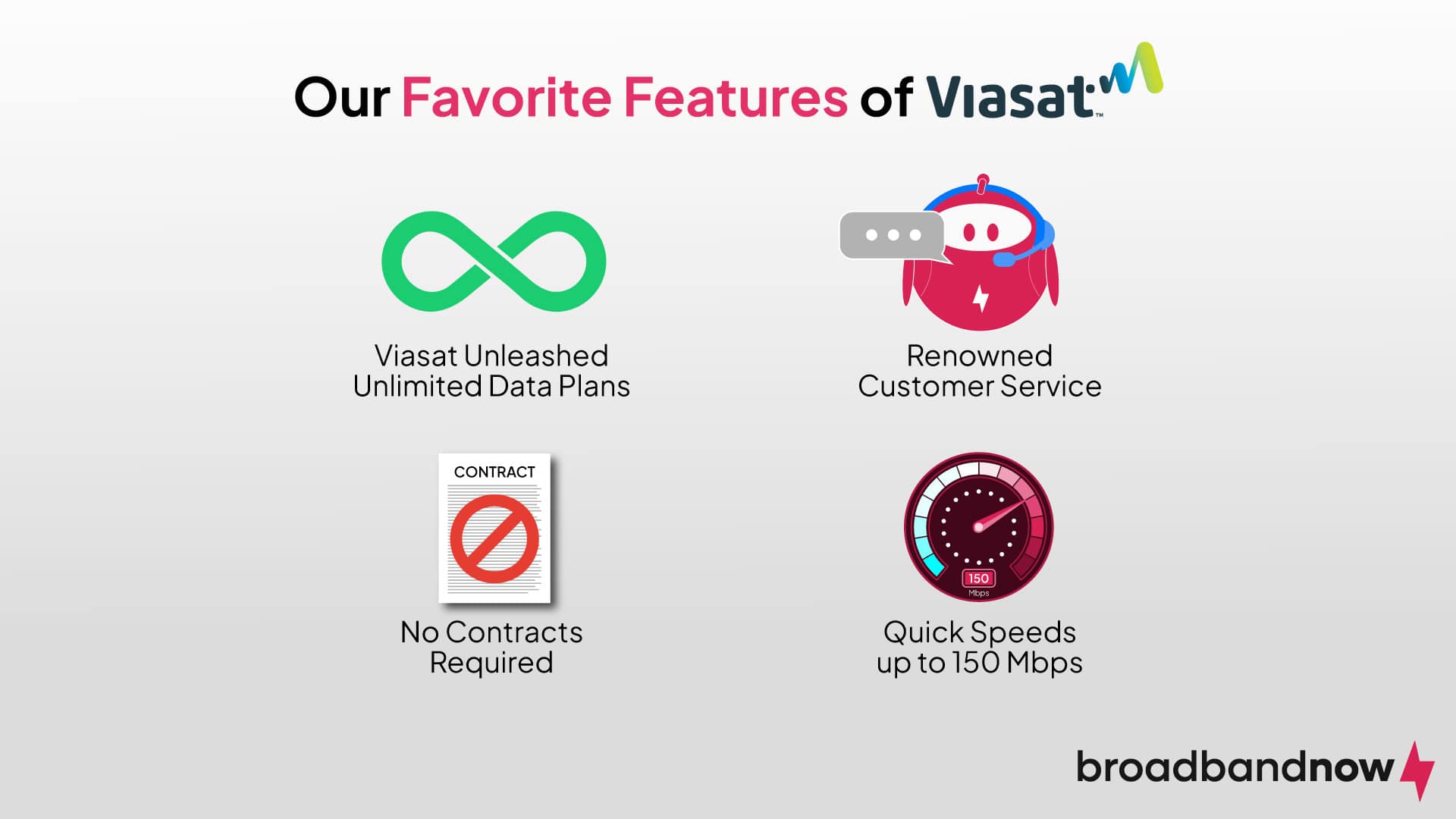
The name Viasat is synonymous with satellite internet. As a groundbreaking and long-established satellite internet provider with comprehensive mainland U.S. coverage (sorry, Alaska and Hawaii), Viasat offers flexible plans, fast internet speeds, and a strong customer support rating. Viasat is a great option for remote homes needing a variety of plans and reliable customer service, combining unlimited data, no contracts, and speeds up to 200 Mbps to comfortably handle everyday household scenarios like remote work, video calls, and a few smart home devices. These packages typically start at an introductory price of $39.99 per month. However, it’s worth noting that not all plans offer unlimited data, and if that’s a must in your household, be prepared to choose a higher monthly plan.
While the provider still has higher equipment fees, some connectivity issues, and a time-consuming professional installation for satellite internet, Viasat consistently receives positive feedback on customer service compared with traditional satellite internet competitors, as shown in thousands of customer reviews, demonstrating its commitment to resolving customer issues.
Jim Moffit mentioned in his review of Viasat that he received “excellent customer service each time” he called, while Evan Roper said, “Viasat is the ONLY company to go with when you want results.” If you’re looking for a satellite ISP that provides immense value, doesn’t lock you into a contract, and has a dedicated support staff, you cannot go wrong with Viasat.
What We Like
- Unlimited standard data with Viasat Unleashed plans
- Highly-rated customer service
- No contract requirement
What We Don't Like
- Higher latencies compared to low-earth orbit alternatives
- Costly dish lease or rental fees
Hughesnet (Budget Pick)
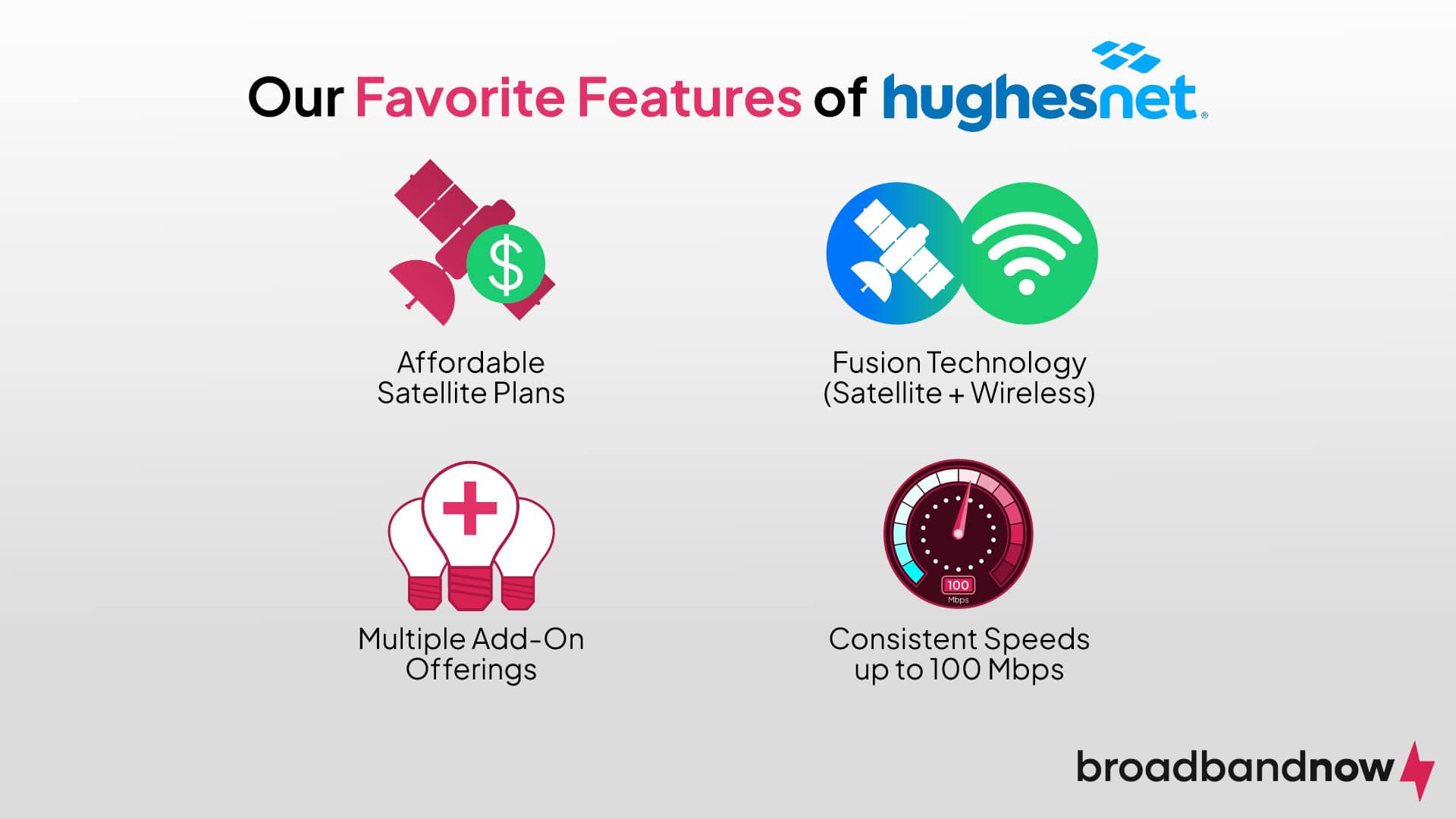
Hughesnet isn’t sitting idly by in the shade while Starlink and Viasat take all the starlight. Instead, the satellite provider offers customers affordable plan options, comprehensive coverage (across all 50 states and territories), and innovative Fusion technology. As a strong best satellite internet option for those monitoring their household expenses, Hughesnet plans currently start at $39.99 per month, providing an accessible baseline for essential web browsing and email. In an effort to stay relevant in the internet space race, Hughesnet’s newest Fusion satellite internet plans combine wireless and satellite connections to deliver low-latency and consistent speeds up to 100 Mbps.
Hughesnet does have some downsides, though, which include required 24-month contracts (with ETFs), no unlimited data cap option (soft data caps on each plan), required technician installation (rarely free), and stiff equipment fees (similar to Viasat). Even with all that, when we dove into our database of hands-on customer reviews about Hughesnet, we found multiple verified users highlighting its track record as a reliable service for rural customers. Martha Miller remarked that “the costs were comparable” to what she “paid for a landline with horrid access,” while Rick Koon said his Hughesnet technician “went above the standard customer service help.” Overall, we found Hughesnet to be an affordable and dependable satellite internet provider that many people in rural areas will find suitable and reasonable for their budget.
What We Like
- Affordable introductory plan options
- Comprehensive availability across all 50 states
- Consistent service with Fusion plans
What We Don't Like
- Restrictive soft data caps
- Pricey equipment fees
Our Top Satellite ISP Recommendations
| Details | BroadbandNow Top Pick | Next-Best Satellite ISP | Best for Budget Buyers |
|---|---|---|---|
| Provider name | Starlink | Viasat | Hughesnet |
| Starting price | $55 per month | $39.99 per month | $39.99 per month |
| Download speeds (up to) | 400 Mbps | 200 Mbps | 100 Mbps |
| Equipment fee | $349 (plus shipping and handling) | $15 per month ($299 dish lifetime lease) | $14.99 per month ($349.98 dish purchase) |
| Installation fee | None, Self-Install | $99–$300 | $99–$199.99 |
| Data caps | Unlimited | Unlimited, but may impose “soft” data caps | Unlimited (100–200 GB priority data) |
| Contracts | No | No | Yes, requires a 24-month contract |
| Bundle options | N/A | VoIP phone | VoIP phone or security software |
| More info | View Starlink Deals | View Viasat Deals | View Hughesnet Deals |
Best Satellite Providers Based on Household Needs
Depending on your household setup, the right satellite internet choice often boils down to specific everyday applications. Here are our quick recommendations to match your highest-intent connectivity goals:
- Best satellite internet for streaming: Starlink offers the highest standard speeds at up to 400 Mbps and low latency, allowing multiple household members to comfortably stream 4K video simultaneously.
- Best satellite internet for gaming: Starlink offers the lowest network latency among satellite options, helping prevent major lag spikes during fast-paced competitive gaming sessions.
- Best satellite internet for RVs: Starlink Roam is the top choice for travelers because of its highly portable hardware and flexible pay-as-you-go mobility data plans that activate anywhere with an open view of the sky.
- Best satellite internet for remote homes: Viasat Unleashed delivers strong coverage and uncapped data without a contract, making it an excellent primary home network for deep-rural properties.
- Cheapest satellite internet plans: Hughesnet offers the most affordable starting plans at $39.99 per month, which works exceptionally well for users seeking a strict budget option for basic web browsing and email.
Why Satellite Internet Could Be Right for You
Not sure if satellite internet is the optimal choice for your household? Review the following common scenarios to see if switching to a satellite connection matches your daily connectivity needs:
- You live in a rural or remote area. Despite efforts on behalf of the government and internet providers to expand fiber and other wired internet connections, millions of people across the U.S. still don’t have internet access exceeding 100 Mbps. If you live in one of these areas, satellite internet can be vital for maintaining the bandwidth needed for HD streaming, daily Zoom calls, and basic smart home security systems. Whether you live on a ranch 50 miles from the next household or a tropical island with only a handful of residents, satellite internet can give you the speed and access that other internet connection types lack in rural areas.
- You want internet service on the move. Today, people want the flexibility to move around and work wherever they please. Whether this means traveling around in an RV, living in a tiny house, or simply living off-grid in a remote location, satellite internet providers let you take your internet service with you, so multiple household members can stream multimedia or submit remote work without signing up for a new ISP every time you move.
- Your area is prone to damage to terrestrial infrastructure from natural disasters. While heavy storms can cause temporary “rain fade,” satellite network infrastructure is uniquely resilient against severe terrestrial disasters. When hurricanes or wildfires destroy the physical poles and wires holding up local cable and fiber networks, an undamaged satellite dish and a backup power generator can keep you online.
How We Chose Our Favorite Satellite Internet Providers
Currently, the residential market for satellite internet providers essentially boils down to three primary companies: Starlink, Viasat, and Hughesnet. However, this dynamic is poised to shift as Low Earth Orbit (LEO) network competitors, such as Amazon’s Project Kuiper, also known as Amazon Leo, prepare for widespread deployment. To help your household make an informed decision today, we evaluated current providers using these specific criteria:
- Availability: Because most satellite internet providers cover the contiguous United States, we evaluated portability. Your ability to move your equipment to a new household or use it remotely factored into our final rankings.
- Speed: We prioritized companies that offer at least one plan capable of meeting the FCC’s updated definition of broadband (100 Mbps download / 20 Mbps upload). This ensures baseline speeds capable of supporting standard household scenarios, such as multiple video streams or remote work calls.
- Value: We sought competitive monthly rates, typically ranging from $50 to $150. Providers offering month-to-month terms and clear policies on data throttling received higher scores than those requiring long-term commitments.
- Reliability: We assessed uptime consistency by analyzing historical outage reports and tracking major network disruptions.
- Reputation: Instead of relying on broad sentiment data, we examined bounded customer satisfaction datasets from the American Customer Satisfaction Index (ACSI) to verify our claims about service quality and reputation.
Methodology for Assessing Internet Providers
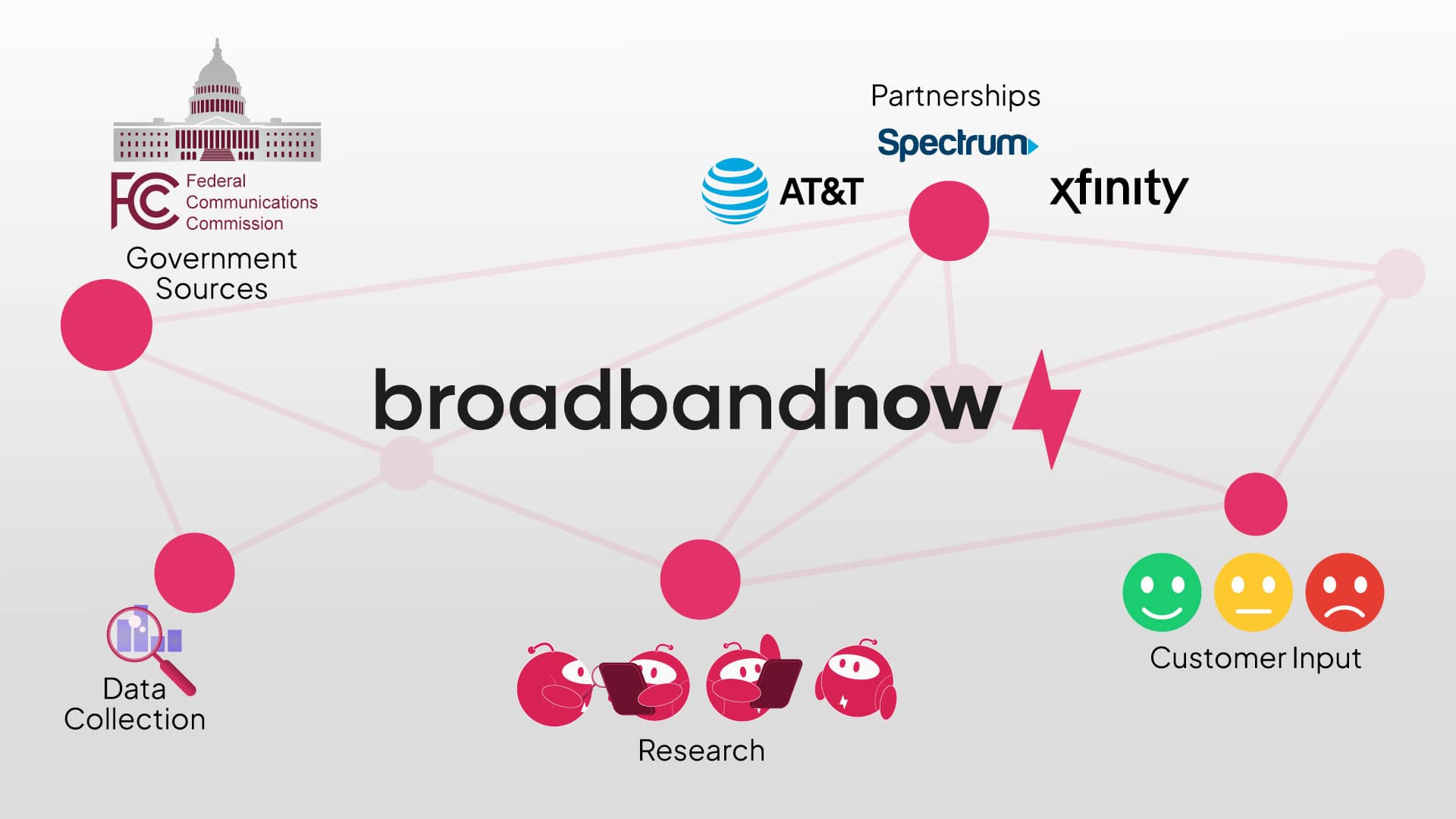
Nothing compares to objective, hands-on experience when evaluating an internet provider. Tracking the customer journey from scheduling the installation to regular daily use is one of the most reliable ways to evaluate these services. We actively evaluate the country’s major internet providers to assess how they perform in everyday household applications, such as streaming in 4K or downloading large files. We aim to provide clear, actionable feedback to help you make an informed choice, regardless of what internet providers are available at your address.
Beyond our firsthand experience with internet providers, we leveraged data from several primary sources to rank these services. We analyzed reports and research from the Federal Communications Commission (FCC) and the FCC’s Broadband Data Collection to source accurate, localized performance metrics about each satellite provider. We continually verify the latest plans, pricing, and promotional details found on official “Broadband Facts” labels. Lastly, we looked to annual performance reports from the American Customer Satisfaction Index (ACSI), J.D. Power, and the Better Business Bureau (BBB) to anchor our rankings in verified customer survey data.
At BroadbandNow, we know internet providers inside and out. When we make recommendations, we base our conclusions on verifiable data, ensuring that the selected ISPs score highly across recent telecommunications industry benchmarks for quality, coverage, and support.
Other Rural Internet Providers Worth Mentioning
While satellite internet is a leading option for rural internet, it isn’t your only choice if you live in a rural area and need reliable connectivity. Fixed wireless and 5G home internet are great alternatives in these areas, offering different price points, data caps, and contractual requirements that may better fit your household’s monthly budget. Here are some popular rural internet providers that use cellular or 5G radio technology instead of satellites:
- T-Mobile 5G Home Internet: With nearly universal access across the country, customers enjoy T-Mobile’s service for its straightforward $20 per month starting standard rate (with AutoPay), numerous sign-up promotions, and download speeds ranging from 170 Mbps to 498 Mbps.
- Rise Internet: Offering traditional fixed wireless service in 18 states, Rise Internet (formerly Rise Broadband) offers data plans suited for daily browsing and quick speeds up to 1 Gbps with prices starting around $29.99 per month (with AutoPay), making it a viable alternative for out-of-town homes.
- AT&T Internet Air: AT&T Internet Air is AT&T’s 5G home internet option that many people across the U.S. are adopting as legacy DSL networks are retired. Subscribers can achieve speeds between 300 Mbps to 300 Mbps, with a baseline price of $55 per month and no contract.
- Verizon 5G Home Internet: While standalone prices begin at $35 per month (with AutoPay), Verizon 5G Home Internet delivers impressive 5G capabilities with download speeds up to 300 Mbps on basic plans to areas without significant fiber or cable internet offerings.
- EarthLink: EarthLink’s home wireless plans offer 5G connections to rural areas for as little as $49.95 per month. However, you’ll have to choose a plan that fits your household’s usage, often with a data cap between 100 GB and 300 GB per month, or pay a premium for unlimited data.
Tips for Picking the Perfect Satellite Internet Provider
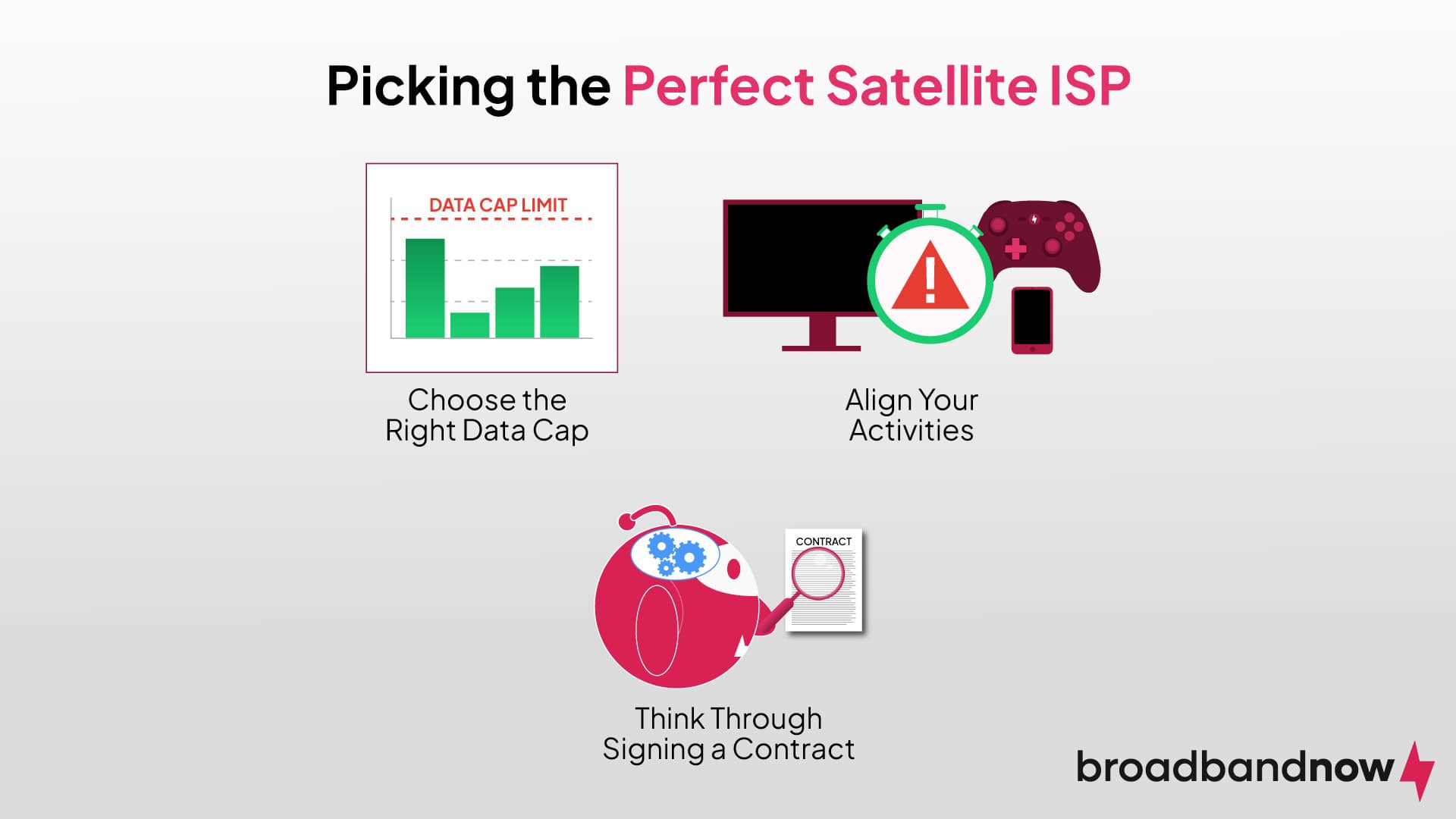
Satellite internet allows customers to live a flexible lifestyle, but there are some trade-offs that can creep up on you if you aren’t prepared. Before you subscribe to any satellite internet provider, consider the following factors to ensure a seamless connectivity experience for your household:
- Choose the right data cap. Before signing up for any plan, review your last internet bill to see how many gigabytes (GB) of data you used throughout an average billing cycle. If your household frequently streams 4K video or relies on video conferencing for remote work, you may quickly exceed restrictive 100 GB caps and should prioritize unlimited satellite plans.
- Align your activities. You’ll still need to be conscious of your activities and adjust them according to your new connection’s latency limits. For example, competitive multiplayer gaming like “Call of Duty” may suffer due to high ping times, whereas downloading large files or streaming movies will perform much better.
- Think through signing a contract. If you’re unsure about staying in one location for multiple years, you might want to pay the upfront equipment costs to get service without a contract so you don’t get stuck with an early termination fee (ETF) that could cost hundreds of dollars later.
Choosing Your Satellite Internet Provider
Finding the right satellite internet provider involves weighing your specific needs for speed, data, and budget against the realities of location-bound technology. Whether you lean toward Starlink for its raw speed and low latency, Viasat for its balanced unlimited options, or Hughesnet for its affordability, taking the time to assess your household’s digital habits will ensure you pick a plan that keeps you reliably connected without breaking the bank.
Frequently Asked Questions About Satellite Internet Providers
Which internet provider offers the best satellite internet plan?
Starlink is the best overall satellite internet service for most consumers due to its high speeds and low latency, while Viasat and Hughesnet serve excellent niche roles depending on your budget and location. Choose Starlink for competitive gaming and streaming 4K video, choose Viasat for its widely available unlimited data without expensive upfront equipment fees, and select Hughesnet if you need the most affordable, entry-level satellite internet plan.
What kinds of speeds can you get with satellite internet?
Satellite internet speeds typically range from 25 Mbps to 280 Mbps, making them mostly sufficient for a standard household. However, most satellite internet providers have a soft data cap, meaning that once you hit it, your service may be throttled or significantly slowed. This means that your advertised speeds can change substantially if you exceed your allotted data limit during a billing cycle.
Can you stream Netflix and Hulu using satellite internet?
Yes, you can easily stream Netflix and Hulu using satellite internet because modern plans surpass the baseline speeds required for high-definition viewing. Netflix and Hulu require a minimum of 5 Mbps and 3 Mbps, respectively, to stream. If you want 4K video quality on Netflix, you’ll need at least 15 Mbps speeds. Most satellite internet plans have minimum speeds of 25 Mbps, so streaming with satellite internet shouldn’t be a problem if you don’t have other activities fighting for bandwidth. The more significant consideration is the amount of data you’ll use by streaming over time if you have a data cap.
Is satellite internet better or worse than 5G home internet?
For most households, 5G home internet is better than satellite internet due to its higher median speeds, lower monthly prices, and lower latency. While satellite internet provides ubiquitous coverage in remote regions without cellular towers, 5G home internet providers tend to offer greater overall value for straightforward browsing and smart home connectivity. Moreover, not all 5G home internet providers have reached the most remote areas of the country, making satellite internet a staple in many rural communities.
How does satellite internet work?
Satellite internet works by transmitting internet data signals back and forth between a dish mounted on your home, a communications satellite in space, and a ground station on Earth. Traditional providers like Hughesnet and Viasat provide this connection by utilizing GEO satellites in orbit. They receive data from users via their ISP’s offices and beam it back to them via reception dishes at their residences. Due to the physical distance between an internet user and satellites over 22,000 miles away, there can be significant delays in various activities.
In comparison, LEO satellites, such as those used by Starlink, orbit the Earth at much lower altitudes than GEO satellites. This lower altitude means these satellites can be smaller, cheaper, and easier to launch into space. With shorter distances, LEO satellite internet providers can deliver higher internet speeds and lower latency than traditional satellite ISPs.