Low-Cost Internet: What Options Are Available for Affordable Internet Service?
What programs are available for free or low-cost internet following the end of ACP?
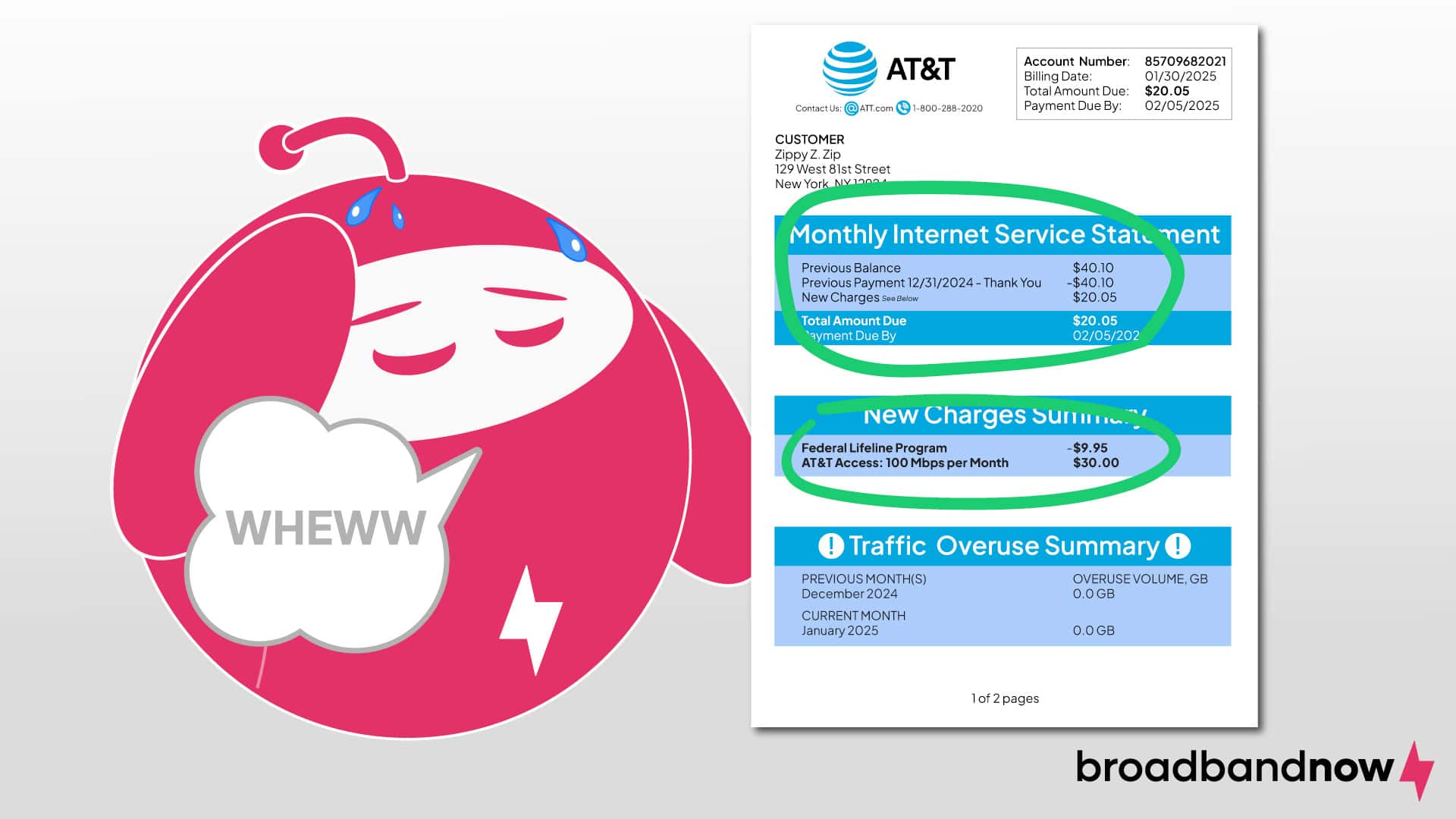
- Major internet service providers, including AT&T and Xfinity, provide cheap internet plans for qualifying households.
- Government assistance programs like Lifeline offer monthly service discounts to residents who meet specific income guidelines.
- Public Wi-Fi networks and community hot spots are free options, though you should always use a VPN to protect your personal data.
Whether you are a remote worker relying on daily Zoom calls, a family streaming 4K content, or someone simply checking emails, reliable internet access is more important than ever. But despite being a necessity, 1 in 5 Americans (19%) worry about paying their internet bill each month. Fortunately, you can take advantage of multiple programs that offer affordable internet plans directly from providers or through monthly government subsidies. Our guide covers low-cost and free internet options for households with low or fixed incomes, and explains how to apply for the best connectivity assistance programs available today.
TL;DR: Affordable Internet Options
If you need affordable internet following the end of the Affordable Connectivity Program in June 2024, here are your two best options:
- The Lifeline program: Provides a $9.25 monthly subsidy to qualifying households
- Dedicated low-income internet plans: Major internet providers like Xfinity and AT&T offer plans for qualifying households.
Qualification for these programs requires participating in assistance programs:
- Medicaid
- SNAP
- SSI
- Specific income thresholds based on the Federal Poverty Guidelines
Watch: Low-Income Internet Plans
Did you know that some internet service providers have a “secret” menu? Check out our video on which ISPs offer low-income internet plans that aren’t boldly advertised on their websites.
Types of Low-Cost Internet, Explained
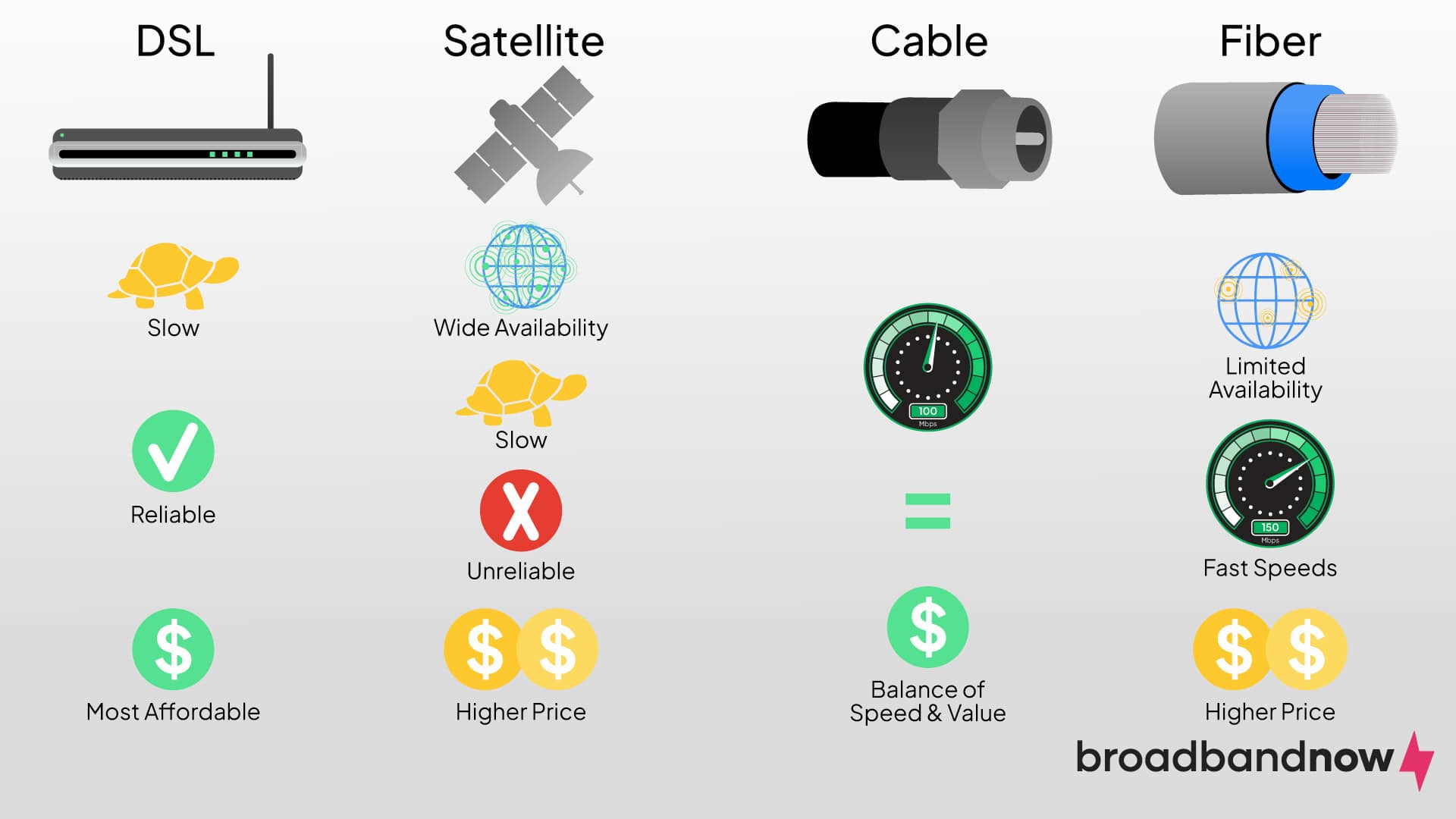
There are four main internet connection types that differ in speeds and pricing:
- Fiber: Fast speeds, but may not be available in some areas (yet).
- Cable: Widely available, with a balance of speed and value.
- DSL: Slow, reliable, and often the most affordable.
- Satellite: Wide availability, slow, unreliable, and higher pricing.
Fiber is generally the best internet option, but it depends on the deals available in your area and your internet budget. While completely free internet options have become rare since the end of the federal Affordable Connectivity Program, deeply discounted low-income internet plans remain available.
Before evaluating the best low-cost options, it’s important to note that you will most likely need to make concessions to get your internet at a steep discount.
You can generally expect slower speeds and sometimes data usage limits. If you don’t plan to download large files or host competitive multiplayer gaming sessions, and you are content with slower speeds for standard browsing, these baseline plans can save you a lot of money.
Affordable Connectivity Program Scams: Since the program ended, ACP scams have circulated online. Products, sellers, or other types of scams claim to offer ACP discounts or low-cost internet options. Protect yourself by learning to identify these scams, and be wary of red flags when searching for affordable internet options. Government programs, such as Lifeline, will use reputable government websites when signing up.
Lifeline Program
The Lifeline program is the primary government program that provides a $9.25 monthly discount on internet or phone service for eligible low-income households. Residents on qualifying Tribal lands receive up to $34.25 per month. BroadbandNow Research shows that up to 43% of adults with household incomes under $30,000 lack a home broadband subscription, and Lifeline helps make access possible. This program helps low-income households access basic telecom services at an affordable rate, ensuring families stay connected for essential needs such as virtual learning and telehealth appointments.
Who Qualifies for Low-Income Internet?
To qualify for assistance through Lifeline, you must have an income at or below 135 percent of the federal poverty level or participate in one of the following programs:
- Medicaid
- SNAP
- Supplemental Security Income (SSI)
- Federal public housing assistance (Section 8)
- Veterans Pension and Survivors Benefit
Tribal communities also have special considerations that afford eligibility for Lifeline:
- Any of the federal assistance programs listed above
- Bureau of Indian Affairs General Assistance
- Tribal Temporary Assistance for Needy Families (Tribal TANF)
- Food Distribution Program on Indian Reservations
- Head Start (provided income eligibility criteria are met)
If you are qualifying via your household income, you must make at or below 135 percent of the Federal Poverty Guidelines. Here is a quick reference for the 2026 income limits in the 48 contiguous states, Washington, D.C., and U.S. territories:
| Household size | 135% of Federal Poverty Guidelines (Annual income for 48 Contiguous States, D.C., and Territories) | Alaska | Hawaii |
|---|---|---|---|
| 1 | $21,546 | $26,933 | $24,786 |
| 2 | $29,214 | $36,518 | $33,602 |
| 3 | $36,882 | $46,103 | $42,417 |
| 4 | $44,550 | $55,688 | $51,233 |
| 5 | $52,218 | $65,273 | $60,048 |
| 6 | $59,886 | $74,858 | $68,864 |
| 7 | $67,554 | $84,443 | $77,679 |
| 8 | $75,222 | $94,028 | $86,495 |
| For households with more than eight persons, each additional person adds: | $7668 | $9,585 | $8,816 |
Lifeline application checklist
Applying for Lifeline requires navigating a few distinct steps. Follow this concise checklist to ensure your application gets processed efficiently:
- Eligibility check: Verify whether your current household income or active participation in qualifying assistance programs meets the program’s strict guidelines.
- Required documents: Gather copies of your essential documentation. Collect your recent tax returns, pay stubs, valid photo ID, or official letters indicating your participation in qualifying programs.
- Application path (National Verifier): Create an account and submit your application online through the government’s official National Verifier portal, or mail a physical form to receive an official approval decision.
- Activation timing: Once approved, locate a telecom company in your area that accepts the Lifeline subsidy and complete your service enrollment. You will generally see the $9.25 credit applied within one billing cycle.
- Escalation options: If you are denied in error, you can appeal the decision through the Lifeline Support Center by calling their help line or submitting a secondary review request with updated documentation.
Internet Plans Under $50: Low-Income Assistance Options From Major Providers
If you do not qualify for a government subsidy, many major telecom providers offer discounted internet plans tailored for low-income households. From remote workers maintaining consistent video call connections to students completing daily homework assignments, these subsidized tiers ensure that everyday consumers are not paying premium prices for basic broadband access. Below is a high-density breakdown of the top provider programs available today.
| Internet provider | Program | Pricing | Speeds | Data caps | Contracts | Equipment | Needed to qualify |
|---|---|---|---|---|---|---|---|
| AT&T | Access from AT&T | $30 per month (pre-tax) | Up to 100 Mbps download and 20 Mbps upload | No data cap | No annual contract | Wi-Fi gateway included | Eligible households enrolled in government assistance programs, such as SNAP, or those with an income at or below 200% of the Federal Poverty Guidelines |
| Spectrum | Internet Assist | $24.99 per month (pre-tax) | Up to 50 Mbps download and 10 Mbps upload | No data cap | No contract | Free modem included with a $5 per month Wi-Fi router fee | New Spectrum customers with at least one person in the home participating in the National School Lunch Program, the Community Eligibility Provision, or Supplemental Security Income (age 65 and older) |
| Comcast Xfinity | Internet Essentials | $9.95 per month (pre-tax) | Up to 50 Mbps download and 10 Mbps upload | No data cap | No annual contract | Wi-Fi equipment included | Eligible Xfinity customers who participate in public assistance programs, such as Medicaid, SNAP, WIC, or SSI |
| Cox | ConnectAssist | $30 per month (pre-tax) | Up to 100 Mbps download and 5 Mbps upload | No data cap | No contract | Wi-Fi modem included | Households enrolled in income-based programs like SNAP or Medicaid. The separate Connect2Compete plan ($9.95 per month) is strictly for families with a K-12 student utilizing free or reduced school lunches |
| Mediacom | Xtream Connect | $28.99 per month (pre-tax) | Up to 100 Mbps download and 10 Mbps upload | No data cap | No contract | Standard Wi-Fi modem included | General low-income households. |
The programs below are tailored to provide accessible pricing for people on fixed incomes. If you can’t find information for your specific provider, a phone call to customer support will often get you information about the company’s assistance program. Because federal subsidies like Lifeline typically use 135% or 200% of the Federal Poverty Guidelines (FPL) as a baseline for eligibility, verify your household size against the current federal limits listed in the Lifeline section above.
AT&T Access
The AT&T Access program offers basic internet service for low-income families. With speeds up to 100 Mbps for $30 per month, it’s a viable way to stay connected for basic web browsing and streaming educational content without frustrating buffering.
| AT&T Access Program Overview | |
|---|---|
| Monthly Price (Pre-Tax) | $30.00 |
| Speeds (Down/Up) | Up to 100 Mbps Down / Up to 20 Mbps Up |
| Data Cap | None |
| Equipment/Wi-Fi Fees | $0 (Wi-Fi gateway included) |
| Contract | No annual contract required |
| Eligibility |
|
| Application Link | AT&T Access Application |
| Coverage Notes | Available anywhere across AT&T’s 21-state wireline footprint. |
Follow this quick application checklist if you’re interested in signing up for the Access program:
- Eligibility check: Determine if you meet the 200% FPL poverty guidelines or participate in SNAP/School Lunch Programs.
- Required docs: Secure a recent pay stub, tax return, or official award letter proving your benefit status.
- Application path: Submit your details on the digital National Verifier form and complete the specific AT&T Access portal screens.
- Activation timing: Approval typically takes 3 to 5 business days before an installation kit ships to your door.
- Escalation options: If you face a denial, AT&T provides a resolution hotline right on their dashboard. Check that all uploaded proof matches your billing name exactly.
Access is available for families approved for certain government assistance programs or who meet income eligibility requirements. If your household doesn’t qualify for approved programs, AT&T internet deals are generally the lowest consumer-grade option for home internet. Keep in mind that AT&T DSL speeds are usually slower than cable for streaming video.
Internet Essentials From Comcast
Comcast’s Internet Essentials program lets qualifying customers buy a reliable broadband plan for $9.95 per month, delivering speeds up to 50 Mbps. The service also includes free in-home Wi-Fi, and it’s available without a credit check or an annual contract.
One unique perk is the ability for customers to purchase a subsidized laptop or desktop computer for $149.99, which is less expensive than what you’d find in a store or online. Depending on the computer you choose, it may include essential software such as Microsoft Office and Google Docs, as well as the Google Play Store.
To be eligible for the Internet Essentials program, you must participate in assistance programs like Medicaid or SNAP, or have at least one child eligible for the National School Lunch Program (NSLP). Complete these application steps to secure your discount:
- Check eligibility. Confirm you participate in a qualifying government program or meet the income guidelines based on federal poverty levels.
- Gather documentation. Prepare official award letters proving your involvement in NSLP, Medicaid, or SNAP.
- Complete the application. Apply directly through the Internet Essentials portal and await approval, which usually takes a few business days.
Spectrum Internet Assist
Spectrum Internet Assist functions similarly to the Comcast program and requires families to have a child eligible for the NSLP or the Community Eligibility Provision (CEP). The service offers a free modem and a 50 Mbps connection for $24.99 per month. Wi-Fi costs $5 extra per month with this plan.
Senior household members over 65 who receive Supplemental Security Income (SSI) also qualify for this tier. To speed up the application process, follow these guidelines:
- Verify qualifications. Ensure your household receives NSLP, CEP, or SSI benefits.
- Prepare proof of enrollment. Obtain current documentation showing your name and the qualifying assistance program.
- Submit the forms. Complete the application online or print and mail it to Spectrum for review.
Cox Connect2Compete and ConnectAssist
Cox Low-Cost Internet is integrated with the Connect2Compete program, which aims to help K-12 students access affordable internet. The program costs $9.95 per month, and it’s available to families with a child in kindergarten or first grade through 12th grade.
For households without school-aged children, Cox offers the ConnectAssist plan for $30 per month, which delivers speeds up to 100 Mbps and includes a modem rental.
To be eligible for a Cox Low-Cost Internet plan, your family must participate in a government assistance program like SNAP, NSLP, Temporary Assistance for Needy Families (TANF), or public housing. Follow this quick process to get started:
- Identify the right plan. Choose Connect2Compete for students or ConnectAssist for general low-income eligibility.
- Collect official documents. Secure your SNAP, TANF, or public housing participation award letters.
- Apply for service. Submit your application online to schedule an activation date.
Mediacom Xtream Connect
Mediacom is another major ISP that participates in the Connect2Compete program. It offers high-speed internet service for $9.95 per month for speeds up to 25 Mbps to families with at least one child in a free or reduced-cost lunch program.
For general low-income households, Mediacom offers the Xtream Connect plan for $28.99 per month, which delivers speeds up to 100 Mbps.
To sign up for Xtream Connect or Connect2Compete, use this simplified checklist:
- Check your local footprint. Verify Mediacom services your specific address.
- Provide documentation. Show proof of income or that a child in your home participates in the NSLP.
- Sign up online. Enroll through the Mediacom portal to receive standard installation and equipment.
What Are the Best Internet Options for Low-Income Families?
While assistance programs offer the most dramatic savings, households that don’t meet strict eligibility thresholds still have choices. A surprising number of plans from major providers offer low-cost internet without requiring you to apply for a specific program.
Keep in mind that these plans may not be available in your area. Information on provider availability is easily accessible via the search tool at the top of this page.
Xfinity
Xfinity offers inexpensive plans, but it stands out with its bundled services. If you’re looking to purchase high-speed internet with excellent TV service, Xfinity may be your best option. Their Connect plan often provides speeds near 150 Mbps, which easily support a typical household’s streaming content and basic work tasks.
View Xfinity Internet deals.
Spectrum
Spectrum‘s cheapest plan is more expensive than what you’ll find with Xfinity, but a key advantage it offers is plans without data caps or contracts. When your income is limited, the ability to cancel service at will may justify the slightly more expensive monthly cost.
Spectrum’s most affordable plan is fast enough to support HD streaming, making it an excellent option for people willing to shell out a little extra each month for a speedy, contract-free connection. Current base plans typically start around 300 Mbps, which is robust enough for remote workers on Zoom calls and competitive gamers alike.
View Spectrum internet deals.
Verizon Fios
Verizon Fios offers some of the fastest speeds on the market, with no-contract plans and unlimited data. Because it operates on a fully fiber-optic network, it provides symmetrical download and upload speeds.
Fios isn’t the cheapest option, but the combination of fast speeds, no contracts, and no data caps makes Verizon worth a look. If Fios pricing is too high, Verizon’s 5G Home Internet frequently offers generous discounts when paired with a qualifying mobile plan.
View Verizon Fios internet deals.
CenturyLink
CenturyLink is one of the most accessible providers in the U.S. for rural service. CenturyLink’s own fiber service can deliver much faster, symmetrical speeds in select neighborhoods, but it’s a reliable (and sometimes the only) option for people who live far from a city.
View CenturyLink internet deals.
HughesNet
DSL service is available to the majority of the U.S. due to preexisting infrastructure, but HughesNet satellite service has an even wider range. HughesNet remains one of the top satellite providers despite slightly slower speeds. Their current plans offer speeds up to 100 Mbps and come with unlimited data (no hard caps), accommodating essential daily connectivity.
View HughesNet internet deals.
Use These Resources to Get Low-Cost Internet
Navigating the internet marketplace without overspending requires knowing exactly where to look for assistance. Millions of households qualify for programs that reduce expensive monthly commitments to manageable utility costs. By taking advantage of existing subsidies and provider-specific plans, consumers can maintain the reliable access needed for remote work, educational tools, and telehealth services. Always check program requirements directly through government portals and your target provider to ensure you secure the most competitive monthly rate available in your area.
Frequently Asked Questions About Low-Cost Internet
Is there any government program that provides free internet?
No, the government doesn’t directly offer free internet. However, programs like Lifeline can significantly reduce internet bills for qualifying participants of government assistance programs, such as Medicaid and SNAP. Eligibility extends to those involved in federal assistance programs, keeping monthly costs at roughly zero for some basic broadband plans.
Can I receive internet assistance if I’m on SNAP?
Yes, SNAP participants are eligible for internet assistance through the Lifeline program. Additionally, many Internet Service Providers (ISPs) offer their own low-income assistance programs that SNAP participants can benefit from.
Does the government cover internet costs for eligible households?
Yes through Lifeline, an FCC program, eligible households receive a monthly discount on their internet bill, which can cover part or all of the cost. The standard benefit is up to $9.95 and up to $34.25 for households on tribal lands.
Was the Affordable Connectivity Program renewed?
No, the ACP ended on June 1, 2024, due to a lack of funding from Congress. Households receiving the ACP discount lost it when the program ended, but many ISPs continue to offer alternative low-income tiers on their own.
What replaced the Affordable Connectivity Program (ACP)?
Unfortunately, no single program replaced the ACP. Lifeline is another federal program that can offer discounts on internet service for qualifying households, and major ISPs also offer reduced plans for qualifying customers.
How can I access internet assistance if I live on tribal lands?
For residents on tribal lands, the Tribal Broadband Connectivity Program (TBCP) provides funding for broadband services, though it targets entities, such as tribal organizations, rather than individuals.